
1041 Review: Trust & Taxes
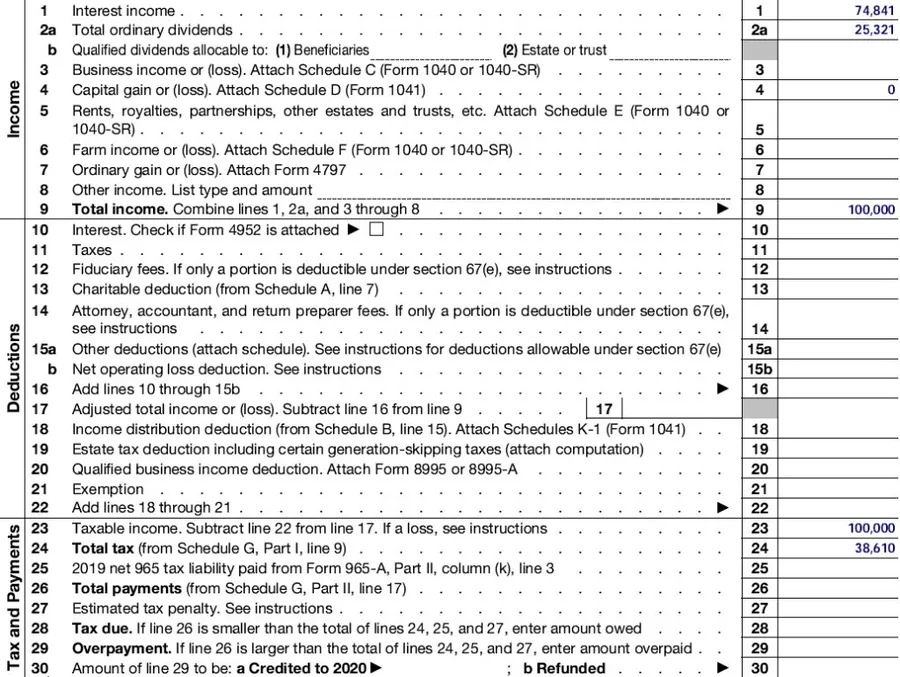
Greta Erskine's trust paid $38,673.50 in taxes last year. The question is whether the trust can reduce that tax bill without distributing income Greta does not need.
Use this article when a trust tax return is driving family decisions.
Helpful when trust income is creating taxes before the family needs distributions.
Modeled annual trust tax savings in the reviewed Form 1041 scenario.
The planning question is whether tax-driven distributions match the family purpose.

Meet Greta Erskine
Greta's husband, Abraham, passed away in 2005 and left her in charge of his credit shelter trust. The trust was built for their family, not for Greta's current income needs.
The problem is simple enough to see on the tax return. The trust produces income every year, and the tax bill keeps pulling money away from the people Abraham and Greta wanted to benefit.
Greta's CPA suggested distributing trust income to lower the trust's tax burden.
Greta did not want tax payments to keep reducing assets meant for her children.
The trust was producing income Greta did not need.
Because the trust held balanced investments, it generated ordinary dividends and interest each year. Greta was not against investment income in general. This trust, though, was not meant to support her spending.
Distributing the income could reduce the trust's tax burden, but it would move money out of the trust before Greta wanted that to happen.
Start with Form 1041.
The first review point is the trust tax return. Greta wants to reduce the tax burden without treating every year's income as money that has to leave the trust.
Before
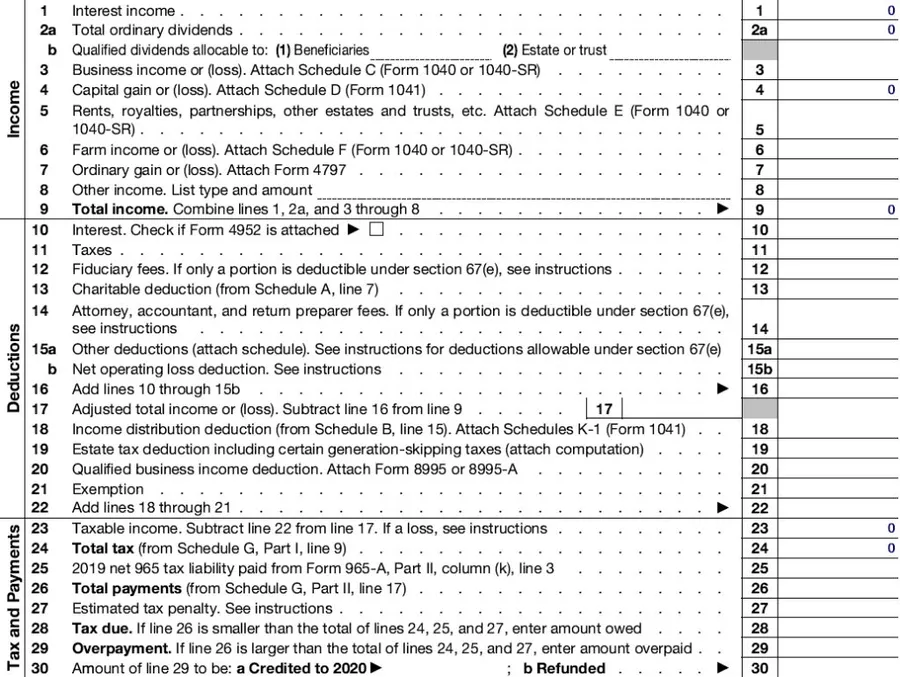
After
Impact
In the reviewed scenario, Total Tax on Form 1041, Line 24 falls to $0.
Why Section 72(u)(1) mattered
The tax result centers on Internal Revenue Code Section 72(u)(1), which deals with annuity contracts held by someone other than a natural person.
Treatment of annuity contracts not held by natural persons
In general, an annuity contract held by a person who is not a natural person is not treated as an annuity contract for income-tax purposes. The rule also provides that holding by a trust or other entity as an agent for a natural person is not taken into account.
If an annuity is held by a trust as agent for a natural person, it may qualify for the exception. Because Greta's trust is for Greta and her children, the review considered a trust-held annuity that named them as beneficiaries.
The trust income profile changed.
With the trust invested in a tax-deferred annuity, it no longer showed recognizable interest income on Line 1, ordinary and qualified dividends on Lines 2a and 2b, or capital gain or loss on Line 4 in the same way. Income, dividends, and gains could instead grow tax deferred.
Taxes no longer had to drive distributions.
Since Total Tax on Line 24 fell to $0 in the reviewed scenario, there was no need for Distributable Net Income on Form 1041, Schedule B, Line 7 just to keep taxes from reducing the trust.
Requested distributions can still be paid when required or needed. If they are not needed, those assets can continue growing tax-deferred.
The trust was for the family after Greta.
Abraham and Greta's children, grandchildren, and perhaps one day great-grandchildren were always the focus. Greta's choices had been limited: pay tax with trust assets or distribute income she did not want. Either choice left fewer dollars in the trust.
Taxable account after-tax distribution value
Tax-deferred account after-tax distribution value
Additional modeled dollars for beneficiaries
Before
After
Impact
Under the assumptions used in the 15-year review, the taxable account grew to $2,901,598 while the tax-deferred account grew to $3,399,514. After taxes at the end of the period, the tax-deferred scenario produced the higher beneficiary distribution shown above.
Greta had two goals.
She wanted to reduce taxes and keep more trust assets working for her family. The reviewed design reduced the modeled Form 1041 tax to $0 and gave the trust more control over when assets needed to be distributed.
Before and after Form 1041 review
Legacy assumptions
The legacy review used a credit shelter trust created in 2005 with a $1,500,000 funding amount. The portfolio was modeled as 60% fixed income represented by the Barclays U.S. Aggregate Bond Index and 40% U.S. stocks represented by the S&P 500 Index.
Important information
This material has been prepared for informational purposes only and is not intended as specific advice or recommendations for any individual. There is no assurance that the views or strategies discussed are suitable for all investors. This information is not a substitute for specific individualized tax or legal advice. Discuss your specific situation with a qualified tax or legal advisor.
Bring the trust tax question into a planning conversation.
We can help frame the planning side of the question while you work with your CPA and attorney.
- Start with the trust question and the family outcome.
- Coordinate tax and legal context with the right advisors.
- Use a secure next step before sending sensitive documents.